(UJA) United Jerusalem Alliance (UJA)
MUST READ > How Israel's Sovereignty on Jerusalem's Temple Mount,
Ends Jew Hatred. By Rafael Haar, founder of UnitedJerusalem.com
MUST READ > Why Israel is Not Required to Annex
the Biblical Heartland of Judea Samaria ("west bank") By Rafael Haar,
founder of UnitedJerusalem.com
Search Results
Search this site
39 results found with an empty search
- THE TACTICAL BRILLIANCE OF REMOVING U.S COMBAT TROOPS FROM IRAQ & WHERE IT LEADS.
Iran-backed militias in Iraq said they would begin handing in their weapons BAD JOKE! The US withdrawal of visable combat units from Iraq has a strategic purpose we will soon understand. Our fortree in the green zone, home to the US Iraqi Embassy has been fortified and is well equipped to defend. Otherwise our military pressence is not vulnerable. Know that US allies are embeded throughout Iraq, most of all in the Kurdish region bordering Iran. The (ISMI) Iranian Shite Militias in Iraq have been keeping a low profile. The devasting blockade and overall degradation of the Islamic Republic of Iran. The opening of the Strait of Hormuz to pre-War levels of oil flow will very soon activate the ISMI. Now no longer feeling US military pressure. The new 41 year old PM of Iraq is a very successful businessman. Ali al-Zaidi (AAZ) is an Ethnic Arab Shite born in Baghdad to a prominent family. AAZ has advocated the dismantling of ALL armed militas with the monopoly on the use of force exclusively a funtction of the Iraqi State. The formula is also advocated by the Christian President Aoun of Lebanon. Hezbollah in Lebanon and the ISMI in Iraq present existential threats to the emergence of 2 stable states. Absolutely necessary for peace to prevail in the region. The Houthis's are an Iranian proxy army atemping to take control of Bab el-Mandeb Straits in the Red Sea. Cutting off a vital maritime route of oil. Primarily disrupting Saudi Arabian oil exports. Saudi armed forces are mobilizing and It's Airforce has been attacking Yemens Capital Saana. Houthis strongholds in and around Bab al-Mandeb Straits on the shores of the Red Sea. When, in NOT to much time, the Houthis are finished. Yemens civil war ends. The Saudis and the UAE AGAIN become close allies. When Lebanon and Iraq become stable states after the elimination of their Iranian backed Shite Militias. The (IRI) Islamic Republic Of Irans disolve will become imminent. Moments from the end. The birth of a very appreciate (RI) Republic of Iran will emerge. With a love of the West, NOT a hate that had driven it's Islamic existence for to long. Trump had said he won't launch any attacks against Iran untill after the Midterms. Trump won't have to continue kinetic actions against the IRI when all the brilliant tactics now being implemented achieve the strategic goals presented in my Analysis. Shalom,Shalom always from Rafael Haar from my office in Jerusalem. Where I'm blessed to call Home.
- The Iranian oposition knows their uprising must occur before the U.S Midterms
The Iranian delegation extended its stay in New York following its solidarity news conferences, interviews speeches at the United Nations. Rumor spread that Trump was willing to resume negociations with Iran. The press claimed Trump was willing to compromise on Iran Nuclear weapons program. Trump continues to play the Iranians for the fools they are. The IRGC was pleased that their political puppets they sent to New York City held their hard line. Going so far as to offer AGAIN the same old, no deal scenario to the US. The delegation was convinced to stay because the US told them that they were willing to compromise. The Israel's offered the Iranian delegation Starlink terminals. The IRGC is now wondering if the entire delegation will return to Iran. Further creating friction between the factions. Trump causing more confusion as always. Meanwhile the next new Iranian Governent in exile is forming. The defections from the Iranian military are growing. The oposition is preparing their uprising with the Governent in exile. Iran won't be able to sustain itself much longer. The uprising will happen before the US midterm election, no doubt. They can't rely on a Trump victory. And definitely DON'T TRUST that the Democrats will support them. They believe a Democratic victory will bring an end to the war. Putting the oposition out of business. The oposition knows their uprising must occur before the Midterms. They will NOT take a chance on a Democratic Party win. Stay tunned the good revolution train is going down the tracks. All freedom loving people aboard. Destination, the demise of the current Islamic Republic of Iran.
- WHY ONLY SINCERE ATONEMENT CAN DELIVER AUTHENTIC REDEMPTION
The Children of Israel on Yom Kipur are seeking forgiveness. Hashem knows that indescretions occur between Man and Man. Atonement is the path to salvation. There's nothing that the Children of Israel can do that Hashem won't forgive. The Re-Birth of Israel proves that Hashem always forgives the Children of Israel. The Shema states; "And it will be, if you will diligently obey My commandments which I enjoin upon you this day, to love the L-rd your G‑d and to serve Him with all your heart and with all your soul, I will give rain for your land at the proper time, the early rain and the late rain, and you will gather in your grain, your wine and your oil. And I will give grass in your fields for your cattle, and you will eat and be sated. Take care lest your heart be lured away, and you turn astray and worship alien gods and bow down to them. For then the L-rd's wrath will flare up against you, and He will close the heavens so that there will be no rain and the earth will not yield its produce, and you will swiftly perish from the good land which the L-rd gives you." On May 14, 1948 - The 5th of Iyar 5708, the wrath of Hashem vanished. The land of Israel began a new. With the mercy of Hashem and through the efforts of those who were lured away from the commandments. Men that harm others is a function of Mans relationship with mankind. Agonizing in the absence of Emunah (The Knowledge of Hashem) is the reason for bad and evil behavior. Men can be convinced to forgive those whom they have caused harm. One who desires redemption must pursue forgiveness through atonement. Being pardoned from those whom were damaged by ones actions and words is the goal. Words are bullets, gaining forgiveness for them is difficult. We must reach into the depths of our hearts to convince those whom we have verbally harmed that we are truly sorry. If necessary pleading for forgiveness. Physical acts of harm can heal. If we caused irreparable bodily harm, a more difficult struggle for forgiveness is required. As we supplicate ourselves to Hashem to be inscribed into the Book of Life for a New Year. We must recall and reflect upon all those whom we have harmed verbally or physically. Imploring upon Hashem that all the aggrieved parties of memory have indeed forgiven your unintentional and intentional wrongdoings. Redeption awaits those that have sincerely communicated with all who have granted and received forgiveness. Hashem will inscribe for this New Year in the Book of Life those who have been redeemed in honest atonement. Having effected forgivness for their wrongdoings from those who were injured. I sincerely request to those whom I have harmed intentionally or unintentionally, to pardon me with all the good and forgiveness that possess your heart and soul. I humbly Thank You in advance when you do...
- THE TRUTH WHY ABBAS WILL NEVER STEP FOOT IN THE UNITED STATES AND WHY NETANYAHU CAN AND WILL
Speak Evil, Act Evil, Perpetrate Evil. The 3 Monsters Why the (PA) Palestinian Autority President Mahmoud Abbas fears stepping foot on US soil. He was suppedly baned from entering American. The truth is, Abbas refuses to enter the United States. I challenge anyone to produce a US rejected visa application in Abbas's name. He is not the head of a state and must submit a visa application to gain permission from the US State Department to enter the US. Chances are he got a verbal message declaring him persona non grata. Abbas did not miss the message, NOT WELCOME in the US. Ironically Mamdani wanted to arrest Israel's head of State PM Netanyahu based on an arrest warrant issued by the UN's ICC the International Court of Justice. A court neither the US or Israel are members, which leaves this court without any legal authority or jurisdiction. Mamdani know this. Trump would definitely issue an arrest warrant based on violations of US Federal Law. "The Taylor Force Act." Abbas, a non-head of a fictious state known as "Palestine"is definitely subject to US Federal Law. Perhaps we should Ask Mayor Mamdani, why Abbas will never step foot on US soil, he would know. After all the man he saught to arrest, Benjamin Natanyahu will, without any fear of arrest. Abbas is and has been the President of the (PA) Palestinian Authority for the last 26 years. Abbas was initially elected to a 4 year term in 2005. The PA has refused to hold elections since then. No need to wonder why! The PA fears that Hamas would win the Presidency. The real reason the PA refuses to hold elections. RECALL Legislative elections were held in the "Palestinian" territories on 25 January 2006 in order to elect the second Palestinian Legislative Council (PLC), the legislature of the Palestinian National Authority (PNA). The result was a victory for Hamas, contesting under the list name of Change and Reform, which received 44.45% of the vote and won 74 of the 132 seats, whilst the ruling Fatah received 41.43% of the vote and won 45 seats. Hamas took control of a vast majority of the administrative councils. The PA with the consent of Abbas has never stopped violating the Taylor Forcce Act. This Federal Act of Law was signed into law by U.S. President Donald Trump on March 23, 2018, which cut about a third of US foreign aid payments to the PA. On August 24, 2018, the United States cut more than $200 million in direct aid to the PA. Also in August 2018, the United States stopped giving aid to UNRWA, representing an aid cut of US$300 million. The PA defines the payments to dead terrorists as the "Palestinian Martyr's Fund." The fund distributes money monthly to the convicted murders of Israelis who survived and are in prison. Their families if they were killed in the commission of a terrorist attack are subsequently paid monthly as well. The suicide homicide bombers families also receive a monthly payment for life, the amount is based on how many lives the terrorist murdered. The more people they murdered the more money they receive. Abbas and his PA continues the "Pay for Slay" Government program. The PA states they will never stop payments to what they define as "freedom fighters." and their families. Abbas and the PA has never stopped incentivizeing the Murder of Jews. Mahmoud Abbas won't enter a United States jurisdiction our of fear that he will be arrested for violating US Federal Law. Which can be done. The commander and Chief, President Trump could order Federal Law enforcement to arrest, encarcerate, indict, and try him in a US Federal Court. Abbas can and should be indited, tried and convicted of supporting and funding terrorists. The evidence is overwhelming. Abbas's legacy of spending his last days in a US Federal prision is definitely NOT what he wants to be writen in the last chapter of his biography about his sinister hate filled life.
- Iran and the Future. Now or Never!
The Iranian Oposition is Wiser and More Organized than We Think Saudi Arabia, Qatar and fellow travelers on the Muslim theocraic path are playing both sides. On the one hand they want Iran to survive as an extremely weakened theocraic state. Fear is their motivation. If Iran becomes a pro western leaning free county it would threaten the existing power base and the actual existence of their theocratic autocracies. They are stuck and caught between the proverbial rock and a hard place. Should they help uproot the Islamic Republic of Iran. Or water the roots of its survival. Know that these Muslum theocracies have not reformed enough to feel comfortable with embracing Trump's American vision for the region. The (UAE) United Arab Emirates, Bahrain, Kuwait more than less have. Ironically the Houthis are doing a favor for the West by awakening Saudi Arabia to the threat posed by Iran to the Saudis golden goose, OIL. Kuwait will be joining the Avraham Accords. Which we hope will prod the rest of the refusies to join. The Key to success is the elimination of the Islamic Republic Of Iran. And the emergence again of a pro-western Iran. Iran was wrong again when they bet Trump would seek a settlement because of the US Midterm elections. In fact the Iranian oposition KNOWS Trump is with them. They NOW know they must rise up for the overthrow before the Midterms. They realize the leftist lunitics could take the House and Senate, hurting their prospects of their uprising-overthrow. The Iranian oposition know the DemonRats want to end the war. They feel the window for rising up could close if the US elections go against Trump. They know the time is now fast approaching and may disapear. VERY SOON! Now or never. The GOOD Iranian revolution must occur.
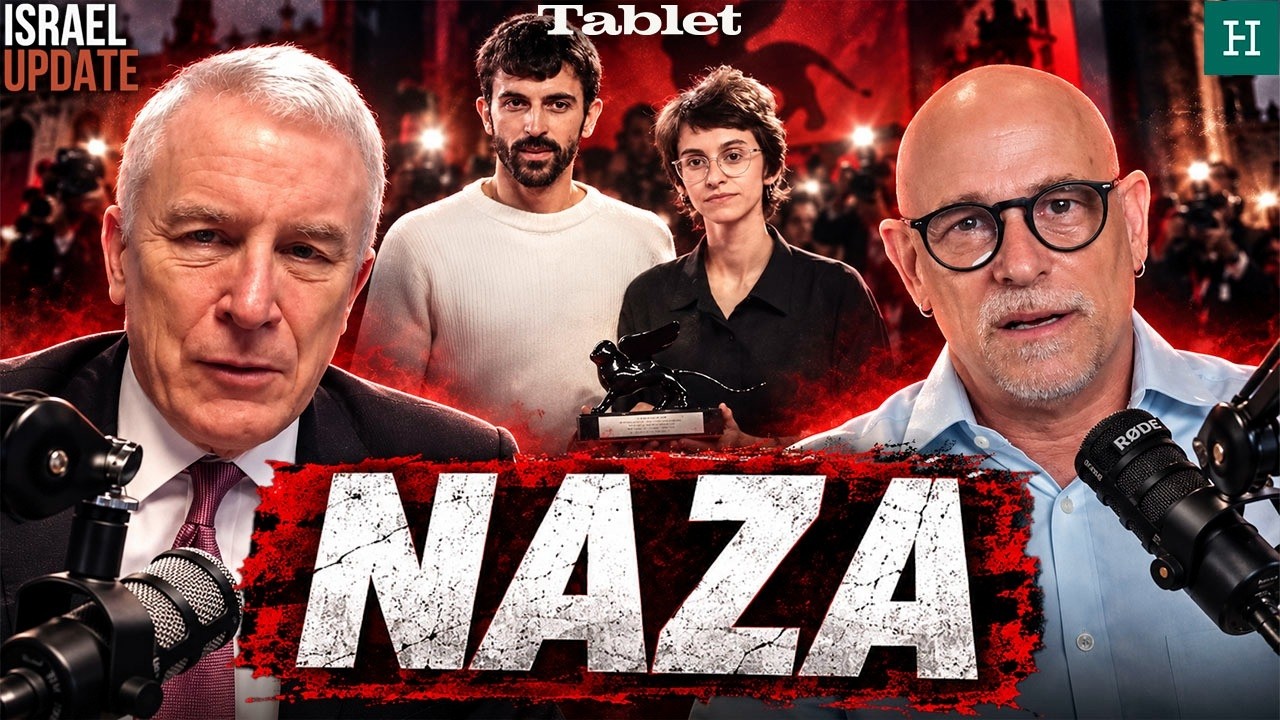
- MUST WATCH. THE TRUTH ABOUT THE BIAS LIES OF NAZA FILM (Colateral Damage).
Israel does more to avoid civilian casualities than any army in history. Israel's IDF can boast civilian to combatant death ratio as the lowerst in the recorded history of urban warfare. The NAZA bias proganda film got a 25 minute standing ovation. Stalin would truly appreciate that. When he spoke at the communist politburo, Stalin would order the killing of the first man who sat and stopped clapping for him.
- The Future of Israel and Lebanese Relations and the Strategic Ali al-Taher Ridge.
Ali al-Taher Ridge has become more than a strip of high ground. It now sits at the center of a quagmire. The issue is the activation of “pilot areas.” The problem is very difficult. Who will control the border zone. The situation is tense. Negotiations are not moving, Hezbollah is escalating, and Lebanese politics are getting more difficult, over the question of disarmament. Disarming non-State terrorist organizations and getting the Lebanese Governemnt to be the sole military force responsible for securing the peace in Lebanon remains the goal. High ground has become central to the war Why Ali al-Taher Ridge matters The dispute over Ali al-Taher Ridge is not just about geography. In border conflicts, ridgelines can shape security calculations because they provide visibility, access, and control. That is why the ridge continues to block progress on activating the pilot areas. These areas are meant to test and begin a broader security arrangement between Israel and Lebanon. The pilot plan cannot function if one of its key locations remains contested. Any ambiguity over who deploys, withdraws, monitors, or guarantees security is critical to avoiding a crisis. For Israel, high ground near sensitive areas is about surveillance and control. For Hezbollah, withdrawal or limits in such areas could be read by supporters and rivals as a big loss. That makes Ali al-Taher Ridge a serious obstacle and a symbol. If negotiators cannot solve this point in Israels and Lebanons favor, it will become harder to sell progress anywhere else. Hezbollah is weighing escalation while looking to Iran The key factor is Iran. Hezbollah has long been part of Iran’s regional illegally armed terrorist proxies. A major escalation involve wider calculations beyond Lebanon’s domestic scene. If Hezbollah is waiting for a “green light,” that suggests the group may not want to act alone in a way that disrupts Iran’s broader regional strategy. The danger is miscalculation. A limited move meant to send a message can trigger a larger response. In a crowded border environment, the space between signaling and warfare can be very narrow. Even small shifts near the border can carry broad political weight. U.S. mediation is stuck on the core issues American envoys are trying to resolve the core disputes between Israel and Lebanon, but the talks remain stalled. That is not surprising. The issues are interlinked, and movement on one front often depends on movement on another. The most difficult questions include security guarantees, border monitoring, the role of the (LAF) Lebanese Armed Forces. U.S. mediation can help shape proposals and close gaps. Israel wants a border with Lebanon where Hezbollah does not exist and cannot threaten its northern communities. Lebanon wants to prevent further Israeli military actions while preserving sovereignty. Hezbollah wants to avoid being pushed away from the border in a way that allows them to survive as an unlawfully armed terrorist group. That combination leaves little room for a trade-offs. The pilot areas were supposed to offer a first step. Instead, Ali al-Taher Ridge has exposed the weakness of incremental deals when core political questions remain unresolved: can there be a credible security arrangement in southern Lebanon while the terrorists of Hezbollah remain unlawfully armed. Historically the answer is unequivocally no. Lebanon’s internal debate over disarmament is intensifying One camp argues that no state can restore sovereignty while an unlawfully armed terrorist militia makes war-and-peace decisions. From this view, Hezbollah’s weapons expose Lebanon to repeated warfare and prevent the army and government from acting as the sole national authority. The opposing camp argues that Hezbollah’s arms remain necessary as long as they present the myth that Israel is a threat. And as long as the (LAF) lacks the strength to defend the country on its own. For Hezbollah and its supporters, disarmament would be, surrendering. Between these positions sits a large group of Lebanese citizens who fear both outcomes: ongoing warfare and another round of internal violence. As in the past the possibility of a civil war is a real fear. Lebanon’s divisions are political, sectarian, economic, and historical. A mismanaged disarmament could deepen instability. The ridge dispute reflects a larger struggle over control and security. What could happen next The near-term path depends on whether mediators can separate the ridge dispute from the broader strategic argument. If they can define a narrow formula for Ali al-Taher Ridge, the pilot areas may move forward. If they cannot, the deadlock will intensify. Hezbollah will increase the violence along the border and raise the threat level in public messaging. Israel will insist on US and Lebanese guarantees before accepting any "pilot" arrangement. The Lebanese government will face even stronger demands to clarify its position on Hezbollah’s illegal weapons. The next phase depends on whether mediation can turn a pause into a deal. The ridge is the test of the wider deal Ali al-Taher Ridge matters because it concentrates every major dispute into one place: security, sovereignty, Hezbollah’s weapons, Israeli demands, Lebanese political limits, and Iranian influence. If by chance the ridge issue is resolved, it may create momentum to activate the pilot areas. If the issue is not resolved, the ridge will remain a symbol of war. For now, the talks are stuck because it reveals how crucial the unresolved questions are.
- Removing the Iranian Autocrats, with the Illusion of a Diplomatic Breakthrough
A promised diplomatic breakthrough looks good from a podium, in Iran it exposes devastating weakness. The Islamic Republic is not a single, disciplined leadership moving toward a clear goal. It is a very tense and desperate coalition of armed powers, political survivalists, with entrenched black-market interests, toped off with an autocratic ideologically drive religious fanatics. That coalition is under intense strain. The currency has lost an overwhelming amount of its value. Fuel lines have grown even longer and longer over time. Food has become scarse and when available, unaffordable. The People are extremely desperate. Fuel shortages turn political arguments into daily hardship. The controlling regime is not united behind any strategy The illusion is: Iran’s ruling system presents itself as controlled, patient, and unified. The reality is in fact the oposite. The Islamic Revolutionary Guard Corps, political elites, smugglers, sanctioned business networks, and state-linked commercial interests do not want the same things. The IRGC and its partners gain from isolation. Sanctions and restricted trade can create protected markets, smuggling routes. A closed economy rewards those who control ports, border crossings, influence networks, and hard currency channels. Civilian politicians face a different pressure. They need the state to function. They need oil revenue. They need enough food imports, fuel supply, and currency stability to stop public anger from boiling over into large scale protests. A loyal political class cannot survive if the basic economy collapses around it. Business leaders tied to the system want access to markets, banking channels, and predictable rules. Smugglers prefer chaos. Security factions prefer confrontation. Politicians may prefer a deal. These interests clash. That is why Iran’s power struggle matters more than the public slogans coming out of Tehran. Economic pain is forcing factions to blame each other When a regime can deliver stability, its factions can hide their rivalries. When it cannot, blame becomes a survival tool. Iran’s economic crisis has reached into ordinary routines. A collapsing currency means salaries very little purchasing power. Food prices become a daily source of stress. Fuel shortages become public evidence of state failure. The government can blame sanctions, foreign enemies, corruption, mismanagement, or hidden profiteers, but people still have to stand in longer and longer line. That pressure changes behavior inside the ruling class. Political figures may blame hardliners for blocking relief. Hardliners may accuse politicians of weakness and betrayal. Business circles may blame corruption and isolation. Security factions may accuse everyone else of failing to defend the revolution. None of these factions wants to be held responsible for the condition of the country. Each wants control without blame. There can never be stablility in this arrangement. A collapsing currency turns policy failure into personal struggle. Trump’s claim of a close deal adds pressure, not calm When Trump says a deal is close regarding Hormuz, the effect inside Iran creates more and more chaos. For the IRGC, many possible diplomatic terms are non-starters because they could limit military leverage or reduce the value of their military. For politicians, the need is more urgent and practical. Sell oil. Bring in hard currency. Feed people. Keep streets calm. This split is not minor. It goes to the heart of regime survival. A faction that can claim it saved the economy may gain power. A faction that looks responsible for hunger, inflation, and gasoline shortages may lose standing. That makes every diplomatic rumor dangerous. It turns negotiation into an internal rivalry. The IRGC wants leverage while politicians need relief The IRGC’s strength comes from more than weapons. It also comes from its role in the economy, its presence in strategic industries, and its ability to shape national security decisions. In a crisis, it can argue that discipline and resistance matter more than compromise. The political class has a harder job. It must explain visible hardship. It cannot eat slogans or distribute ideology at supermarkets. It needs to be competent . This creates competing definitions of survival. For the IRGC, survival means preserving the security state at all costs. For politicians, survival means making a deal before the public loses all its remaining tolerance. For business interests, survival means reopening channels for trade. For smugglers and shadow networks, survival means keeping scarcity profitable. Those goals cannot all win at the same time. Economic strain shows up in closed shops and empty walkways. The opposition is the regime’s greatest fear The regime’s greatest fear is not only sanctions, oil prices, or foreign pressure. It is the opposition at home. That defiant opposition is not a single organization. It includes workers, students, families of prisoners, women demanding basic rights, ethnic and religious minorities, exiled voices, and ordinary people who do not believe reform is possible. The regime can arrest leaders, block communication, and blame outsiders, but it cannot erase the memory of repeated protest waves, that have slaughtered many of them. This is why factional conflict matters. If one faction decides that it cannot survive inside the current order, it will reposition itself. It will stand with the people. It will blame the IRGC and insist on a national reset. That does not mean the faction has become democratic overnight. Survival often wears the language of reform. Still, when ruling elites fracture, the public gains space. Cracks at the top can make pressure from below harder to contain. The Islamic Republic has long relied on fear, patronage, and factional balance. If those three tools disapear, the system will collapse. Food lines reveal the pressure beneath public claims of control. Who breaks first The illusion of an Iranian diplomatic breakthrough rests on the idea that Tehran can negotiate as one actor. It cannot while factions are in contentious conflict with one another, blame each other for their failures, and compete for survival. The IRGC wants to preserve its leverage. Politicians want money, oil sales, and basic stability. Business networks want access. Smugglers want scarcity. The public wants dignity, food, fuel, and an end to rule by fear. Those demands are colliding. When the crisis deepens, one or more factions may try to save themselves by departing from the dictatorship they helped create and sustain. The regime can barely survive pressure from outside when it trys to stay united inside. The greatest danger is when the people are no longer afraid and feel they have nothing more to lose. And ultimately the desperate factions are no longer loyal to each other. Trumps plan comes to fruition. Regime change. Which was always the strategic goal. In the mean time relax and watch Iran implode, and a pro-Western regime emerge.
- NOW YOU CAN UNDERSTAND. THE NEW (BoP) BOARD OF PEACE "ROAD MAP" PLAN.
Israel will withdraw to the original "yellow line" established under Trumps original 20 point plan and endorsed by the UNSC. The resolution recognized Israel control of 50% of Gaza including the border with Egypt. At present Israel controls 70% of Gaza. The 20% Israel redeploys from will become a safe zone for all the Gazans who no longer want to live in a tent as captives under Hamas rule, in a devastated war torn territory. Know that Israel has armed and partnered with the anti-Hamas militias, who will secure the safe zone. With the IDF's assistance when necessary. IF? in fact Hamas surrenders their heavy weapon, placing them in storage, GREAT! They won't because Hamas knows Israel will destroy the storage facility. If Gazan families believe the zone is only another temporary camp, they will not move. If they believe it is a place where Hamas cannot threaten them, recruit their children, seize aid, or drag them back into war, the zone could become a powerful alternative. All the captive Gazans that leave will start a new life without Hamas in the 20%, with the possibility of the additional 50% being made available. These areas of Gaza will become civilian safe zone. Those that choose to stay under Hamas control, deserve what they get. Hamas and friends will be cornered and isolated. Israel will continue to target terrorists untill Hamas no longer exists. In the mean time 70% of Gaza can eventually become a peaceful and hospitable place.
- US Midterms: How Iran, Gas Prices and the Economy Could Boost Republican Prospects for VIctory
A midterm election can turn on one feeling: Is the United States getting better or worse. If Americans see better headlines at home and overseas, cheaper gas, and steady economic growth, the party in power will be stronger. That is why Iran, gas prices, tariffs, and investment will all be part of the same political argument before the midterms. If events break as the Trump administration believes it will, Republicans would head into the campaign with a clear and powerful message: strength and pressure abroad, lower costs at home, and a robust US economy. Politics is shaped by direction. If voters feel momentum, Republicans will benefit. Gas prices are one of the fastest ways voters feel economic change. Iran could become a major foreign policy turning point For nearly five decades, Iran has lived under an Islamic authoritarian theocratic system that has shaped the Middle East for the worse, threatened Israel, backed terrorist groups, and advanced militarily against the United States and its allies. The end of the Iranian theocratic Islamic regime would have enormous positive global consequences. A free Iran would not just be a moral victory for the Iranian people. It would diminish pressure across global energy markets and free up one of the world’s most dangerous maritime flashpoints for open trade. That matters politically because voters generally do not follow every detail of foreign policy, but they do notice outcomes. If the Iran situation moves toward an excellent result, Republicans could state the fact that strength and pressure worked. That message would be especially powerful if it comes with much fewer fears of regional war, less risk to oil shipping routes, and lower oil prices. The strongest Republican case would sound simple: America stood firm The Iranian people were freed from Islamic Tyranny The world became safer Energy prices plummeted That kind of story is easy to understand, and easy to campaign on. Lower fuel costs can quickly become a kitchen-table political issue. The economy will be the deciding issue Most midterms are not won on one issue. They are won on the public’s overall read of the country. That usually starts with the economy. If growth is strong, wages hold up, inflation cools, and investment keeps flowing, Republicans would have a direct answer to the usual midterm question: what have you done? Trump know it starts with regime change in Iran. The argument would be that tariffs and tougher trade policies helped push investment back into the United States. Supporters of tariffs often say they can protect domestic workers, pressure foreign competitors, and encourage companies to build at home. There is a real political appeal to that message. “Made in America” still resonates, especially in manufacturing states and working-class communities. When factories expand, construction rises, and companies announce US-based projects, the campaign message becomes much easier. A strong version of the Republican economic pitch would be: What voters see What Republicans say it means More jobs, lower gas prices, rising investment, stronger paychecks Their agenda is producing results and making America less dependent on hostile regimes That is the frame that could matter most. Tariffs could help the political case, when investments feel real The phrase “trillions in investment” is powerful, but voters will want to see proof in their own communities. People respond to things they can point to: A plant reopening A new construction site More overtime at a local employer Better job options for young workers Local suppliers getting more business If tariffs are connected to real investment, the policy becomes easier to defend. Republicans could say they took short-term criticism to rebuild long-term strength. That argument would land well with voters who believe past trade policies hollowed out parts of the country. It also connects with national security. The pandemic and global conflicts reminded Americans that supply chains matter. A country that cannot make key goods at home is vulnerable. Domestic production could become a central part of the Republican economic message. The most persuasive case would connect the dots: Safer world Less pressure on oil markets Lower gas prices Stronger job growth More US investment Better outlook for families Timing is everything. A positive result in Iran before the election would give Republicans time to define it. A drop in gas prices before Election Day would be felt immediately. New investment announcements throughout the year would give candidates local examples to highlight. That mix could create a campaign built around momentum. If foreign policy, energy prices, and economic growth all move in a positive direction, the GOP could run less as a party asking for patience and more as a party claiming results. A good national mood can shape how voters read the party in power.
- Irans Regional Terrorist Proxies and the "Unity of Arenas" Strategy Amid Rising Warfare with the US and its Allies
Iran’s confrontation with the United States is no longer defined by what happens inside Iran or in the Arabian/Persian Gulf. It now stretches across Iraq, Syria, Lebanon, Yemen, and the Red Sea, where Tehran-aligned terrorist groups can use violence without Iran acting directly. Recent articles in Iranian media have emphasized the growing role of the Islamic Republic’s regional proxies under the idea known as “unity of the arenas.” The message is clear: if Washington and its allies increase pressure on Iran, Tehran wants its enemies to believe that several fronts could heat up at once. How the unity of arenas concept works The “unity of the arenas” concept links separate conflict zones into one broader confrontation. In practice, it means Iran-aligned actors in different countries may respond to events as part of a shared political and military frame, even when each group has its own local interests. For Tehran, this approach has several uses. It spreads risk. Warfare with the United States does not have to be limited to direct Iranian military action. Unlawful groups in Iraq, Syria, Yemen, or elsewhere can create pressure points that could complicate US planning. It raises the cost of escalation. If Washington considers stronger strikes against Iranian targets, it must also weigh possible attacks on US forces, shipping routes, or allied positions across the region. It allows Iran to preserve ambiguity. Tehran can signal influence over these groups while avoiding full responsibility for every action they take. That ambiguity is central to Iran’s regional posture. This does not mean every group acts as a simple tool of Tehran. The Houthis in Yemen, pro-Iranian militias in Iraq, Hezbollah in Lebanon, and armed factions in Syria each operate in different political environments. Yet Iran’s relationships with them give it options that many states do not have. The Qods Force plan signals a phased approach According to the brief reflected in Iranian media reporting, the IRGC Qods Force formulated a phased plan to activate regional proxies if the United States intensifies strikes against Iran. The term “phased” matters because it suggests an escalation ladder rather than a single response. A phased plan could involve several levels of pressure: Limited attacks meant to send a warning Wider targeting of US positions in Iraq or Syria and elseware Pressure on maritime routes through Houthi activity Coordinated messaging across Iran-aligned media and political channels Higher-risk operations if the confrontation expands The purpose would not only be retaliation. It would also be deterrence. Iran wants to convince the United States that military action against Iranian targets could trigger a regional chain reaction. That strategy carries real danger. A phased plan can still become hard to control once multiple terrorist groups, local commanders, and political pressures enter the picture. Miscalculation becomes more likely when each side tries to signal resolve without crossing a line that would trigger a larger war. Remote terrain often becomes part of the geography of regional competition. Why Iraq and Yemen matter most right now The reported establishment of a joint operations headquarters near Baghdad by the Houthis and pro-Iranian unlawful militias in Iraq, if accurate, would be a significant development. It would point to closer coordination between terror groups that operate in different theaters but share an anti-US and anti-Israel orientation. Iraq is especially important because US forces remain present there in a security role, and Iran-aligned militias have a long history of pressuring that presence. Baghdad also sits at the center of Iran’s land corridor of influence through Iraq and Syria toward Lebanon. Yemen matters for a different reason. The Houthis can affect maritime security around the Red Sea and the Bab el-Mandeb Strait. That gives them an impact beyond Yemen’s civil conflict. Attacks or threats in that area can disrupt shipping, raise insurance costs, and draw in naval forces from the United States and its partners. Together, Iraq and Yemen offer Iran two very different forms of pressure. Iraq can threaten US military exposure on land. Yemen can pressure global trade and naval movements at sea. The strategy creates strength and vulnerability Iran’s proxy network gives it reach. It can pressure adversaries from several directions without relying only on its conventional military. This is one reason Iranian media now gives more attention to regional allies and armed partners during moments of escalation. Yet the same network also creates weaknesses. Local partners may act in ways that do not fully match Tehran’s timing. A militia in Iraq may prioritize Iraqi politics. The Houthis may focus on Yemen’s war and their regional standing. Hezbollah must weigh the cost of escalation in Lebanon. These groups share interests with Iran, but they do not all face the same risks. There is also the problem of attribution. Ambiguity can protect Iran in some cases, but it can also fail. If Washington concludes that Tehran directed or enabled an attack, the United States may respond against Iranian assets even if the operation was carried out by a partner group. The result is a strategy that can deter and provoke at the same time. It gives Iran more cards to play, but it also increases the number of places where a crisis can spiral. Sea routes add another layer to the struggle between Iran, its partners, and the United States. What this means for the United States and its allies For the United States, the challenge is not only Iran itself. It is the broader system of allied groups, supply routes, political ties, and regional flashpoints that Tehran can draw upon. That makes response planning difficult. A narrow strike on an Iranian-linked target may not remain narrow. A defensive move in the Red Sea may affect tensions in Iraq. Pressure on militias in Syria may invite a reaction somewhere else. US allies face the same problem. Israel, Gulf states, and European partners all have different threat perceptions, but the “unity of the arenas” idea tries to bind those concerns together. If one front ignites, others may become active through political solidarity, direct coordination, or opportunistic escalation. This is why the reported Qods Force planning matters. The details remain difficult to verify from open sources, but the broader pattern fits Iran’s long-standing use of regional depth as a form of deterrence. The main risk is a war no side fully chooses The most dangerous part of this moment is not that Iran or the United States necessarily wants a full regional war. The danger is that each side may take steps meant to deter the other, while those steps are read as preparation for a wider fight. Iran may view proxy activation as a controlled warning. Washington may view it as an unacceptable threat to US personnel and partners. Militias may see escalation as a chance to strengthen their position. Regional governments may fear being pulled into a conflict they cannot contain. That is the core tension behind Irans Regional Proxies and the Unity of Arenas Strategy Amid Rising warfare with the US. The strategy gives Tehran reach, flexibility, and deterrent value. It also increases the number of actors who can shape the next phase of the war. Border regions often reveal how local conflicts connect to wider regional tensions.
- GOODBYE OLD TRUMP 20 POINT PLAN, HELLO NEW 15 POINT GAZA ROADMAP
Goodbye to Trump's 20 point plan for Gaza. Fairwell to the November 17. 2025 UNSC 2803 which formally endorsed it. NOW we have a NEW "Gaza Roadmap" Put fourth by the Board of Peace (BoP) which Trump is the Chairman, Secretary of State Marco Rubio is also on the Board. Israel wholeheartedly agreed to the 20 point plan. Hamas would be disarmed and dismantled, after which the IDF would redeploy. Forget about those practical common sense requirements. The New "Gaza Roadmap" calls on Israel to withdraw AS the Hamas terrorists simply begin to relinquish their "heavy weapons" putting them into "storage" MAYBE a new beginning, free of Hamas Islamic control over Gaza's non- combatants and civilians is not going to happen under the NEW roadmap? Israel in order to support the (BoP) on it's new 15 point Gaza Roadmap should insist on the following: The IDF will ONLY redeploy when ALL the "heavy weapons" have been collected and placed in storage. (Rockets, Mortars, Rocket Propelled Grenades, Bomb Making Materials. etc.) Since Hamas insists it must retain "light weapons" to control the population they are essentially holding captive. Then Israel and the (BoP) must insist and allow those living under Hamas's war torn controlled territory, to migrate to IDF safe zones. Go abroad, options include family reunification. Know that with "light weapons" Hamas will remains in control of the captive population and all the humanitarian provisioning. The BoP must insist that anyone who wants to leave MUST be released from their captivity. Those that choose to stay in the war torn territory under Hamas control. Deserve what they get. Getting Hamas to surrenders it's heavy weapons, is like getting a lion to become vegetarian. In the highly unlikely event that in fact Hamas places ALL it's "heavy weapons" into storage, that would be a DEVINE TIME. WHY? Israel could destroy the storage facility. Defanging the terrorists, leaving thenwith ONLY hand guns and long guns. If the collection is executed properely and stored. And after Israel destroys the stockpile Hamas will be sitting ducks. The final battle for the elimination of Hamas can be done, with very little IDF casualties. Then the work for re-building Gaza begin. The (BoP) MUST require the Ethnic Arab Muslims to renounce their ridiculous ongoing generational "refugee status" The (BoP) must insist that the the (UNWRA) United Nations Works and Relief Agency be dismantled, cease to exist! Israel had surrendered Gaza in the past. Singapore it did not become. Hope sprung into eternal failure. Gaza can be the test for "Palestinian" autonomy and self goverence. Israel will remain in control of the (WAB) Water, Air and Borders. Untill such time as the Ethnic Arabs pass the test with flying colors. Peace when it prevails will be a wonderful thing. Success comes when you never stop trying
- GOODBYE OLD TRUMP 20 POINT PLAN, HELLO NEW 15 POINT GAZA ROADMAP
Goodbye to Trump's 20 point plan for Gaza. Fairwell to the November 17. 2025 UNSC 2803 which formally endorsed it. NOW we have a NEW "Gaza Roadmap" Put fourth by the Board of Peace (BoP) which Trump is the Chairman, Secretary of State Marco Rubio is also on the Board. Israel wholeheartedly agreed to the 20 point plan. Hamas would be disarmed and dismantled, after which the IDF would redeploy. Forget about those practical common sense requirements. The New "Gaza Roadmap" calls on Israel to withdraw AS the Hamas terrorists simply begin to relinquish their "heavy weapons" putting them into "storage" MAYBE a new beginning, free of Hamas Islamic control over Gaza's non- combatants and civilians is not going to happen under the NEW roadmap? Israel in order to support the (BoP) on it's new 15 point Gaza Roadmap should insist on the following: The IDF will ONLY redeploy when ALL the "heavy weapons" have been collected and placed in storage. (Rockets, Mortars, Rocket Propelled Grenades, Bomb Making Materials. etc.) Since Hamas insists it must retain "light weapons" to control the population they are essentially holding captive. Then Israel and the (BoP) must insist and allow those living under Hamas's war torn controlled territory, to migrate to IDF safe zones. Go abroad, options include family reunification. Know that with "light weapons" Hamas will remains in control of the captive population and all the humanitarian provisioning. The BoP must insist that anyone who wants to leave MUST be released from their captivity. Those that choose to stay in the war torn territory under Hamas control. Deserve what they get. Getting Hamas to surrenders it's heavy weapons, is like getting a lion to become vegetarian. In the highly unlikely event that in fact Hamas places ALL it's "heavy weapons" into storage, that would be a DEVINE TIME. WHY? Israel could destroy the storage facility. Defanging the terrorists, leaving them with ONLY hand guns and long guns. If the collection is executed properely and stored. And after Israel destroys the stockpile Hamas will be sitting ducks. The final battle for the elimination of Hamas can be done, with very little IDF casualties. Then the work for re-building Gaza begins. The (BoP) MUST require the Ethnic Arab Muslims to renounce their ridiculous ongoing generational "refugee status" The (BoP) must insist that the (UNWRA) United Nations Works and Relief Agency be dismantled, cease to exist! Israel had surrendered Gaza in the past. Singapore it did not become. Hope sprung into eternal failure. Gaza can be the test for "Palestinian" autonomy and self goverence. Israel will remain in control of the (WAB) Water, Air and Borders. Untill such time as the Ethnic Arabs pass the test with flying colors. Peace when it prevails will be a wonderful thing. Success comes when you never stop trying.
- AN IMPLODING IRAN IS THE PLAN
The most confusing part of Trump’s Iran posture is the point. Strike hard enough to change the cost of aggression. Pause long enough to let Tehran’s factions blame each other. Talk just enough to keep the door open. Threaten enough to keep the pressure on. That kind of strategy looks incoherent if the goal is a clean, traditional war plan. It looks different if the goal is to make the Islamic Republic implode under its own weight. The argument is simple: diplomacy, in this view, is not trust. It is containment by another name. And the bet behind Trump’s approach is that Iran’s ruling system cannot be permanently contained, deterred, or reasoned into normal behavior. It can only be weakened until its own internal contradictions take over and it implodes. Commercial shipping is often where military pressure becomes economic pressure. The strategy is pressure, pause, and confusion A conventional reading says the United States has two choices with Iran. One side says finish the job. Hit harder, keep going, and break the regime’s military capacity outright. The other side says pull back. Avoid another Middle East war, avoid escalation, and accept talks even if Tehran uses them to buy time. Trump’s posture has often refused to sit neatly in either lane. That is why it frustrates both camps. It can look like escalation one week and negotiation the next. It can sound like dealmaking while also threatening severe consequences. That is not necessarily a contradiction. It is the structure of the policy. The pressure phase targets weapons, proxies, shipping threats, and revenue. The pause phase forces every faction inside Iran to ask the same question: who caused this, who survives it, and who gets blamed if the state runs out of money? That is the point of Trumps Iran Strategy. Let Iran destroy itself from within. The target is not only Iran’s hardware. It is the regime’s internal structure. When U.S. policy focuses on offensive weapons, maritime threats, and the tools used to intimidate shipping, it does more than destroy equipment. It tells insurers, shipowners, and regional governments that the United States is willing to defend the flow of commerce. It also tells Iran’s elite something darker: the old playbook no longer works. Weapons losses can become political losses when factions start assigning blame. The pause can be more dangerous than the strike A strike creates shock. A pause creates suspicion. Inside a closed political system, uncertainty is corrosive. If talks resume, hard-liners suspect betrayal. If threats continue, negotiators suspect sabotage. If money dries up, commanders blame politicians. If infrastructure is at risk, politicians blame military adventurism. That is how pressure turns into chaos. The Islamic Revolutionary Guard Corps, the clerical establishment, intelligence services, old political factions, business networks, and regional proxy managers do not all have the same interests. They may share ideology in public, but they compete for money, protection, and survival. When the regime feels strong, those factions can hide their rivalries. When it feels cornered, rivalry becomes a survival contest. A smart pressure campaign does not need to tell each faction what to believe. It only needs to make each faction doubt the others. Money is the regime’s oxygen Iran’s ruling system relies on cash. It needs cash to pay security forces, fund proxies, reward loyalists, control patronage networks, and keep enough of the state functioning to avoid revolt. When revenue tightens, ideology becomes less persuasive. A fighter paid late becomes angry. A commander whose budget shrinks becomes dangerous. A cleric who cannot protect allies loses authority. A smuggler cut out of profit starts looking for a new patron. That is why sanctions, maritime disruption, military pressure, and diplomatic ambiguity can work together. Each one squeezes a different part of the same machine. The goal is to create a moment when loyalty to the Islamic Republic looks less safe than breaking with it. Regimes weaken when armed institutions begin to doubt the chain of command. Regime change would have to come from Iranians The most important part of this theory is that the United States cannot simply install legitimacy from the outside. Iran’s future would have to be claimed by Iranians. That is where opposition figures, defectors, civil society networks, and exiled leaders enter the picture. Reza Pahlavi has long presented himself as a voice for a secular, democratic transition rather than a restored monarchy imposed by force. Many Iranians inside and outside the country want basic rights that the theocracy stripped away: free speech, women’s rights, religious freedom, normal relations with the world, and a government chosen by the people. If a faction or factions inside the armed state decides the Islamic Republic cannot survive, the decisive move would not be a press conference in Washington. It would be a break in Tehran, Mashhad, Isfahan, Shiraz, or another Iranian center of power. That break would matter most if it sided with the public, not with another dictatorship in new clothing. A real transition would need: A temporary government accepted by enough Iranians to prevent collapse Security forces willing to protect civilians rather than crush them A constitutional process that guarantees civil rights A clear rejection of the hostage-taking, proxy-war model of foreign policy A path toward peaceful relations with neighboring states That is how Iran could become pro-Western, not as a puppet, but as a nation tired of isolation and repression. A future transition would depend on public legitimacy, not outside choreography. Watch the factions, not the speeches Public statements matter less than internal behavior. The real signs to watch are factional blame, defections, delayed payments, unusual security movements, elite families moving assets, and sudden changes in how state media talks about responsibility. Regimes rarely announce that they are falling apart. They deny it until the cracks are too wide to hide. Trump knows that election season doesn't begins until after labor day. Americas Iran outcome should be excellent by then, leading MAGA to victory in the 2026 Midterms. Trump and his superb advisors know; There has never been or will ever be a dipomatic solution with the lunitics ruling the Islamic Republic of Iran. All the last administrations thought making bad deals, containment and deterrence would do the trick. The trick was always on them. Trump won't be fooled like them! In the mean time enjoy watching the Islamic Republic implode.
- TRUMP KNOWS DIPLOMACY WON'T WORK. THE LEFT WING-NUTS CAN'T SAY HE DIDN'T TRY ENOUGH OF IT.
The US keeping continual military pressure on Iran is 100% correct. Resulting in the end of the Iranian Islamic regime. Iranian Drones Attacking Ships in the Straits of Hormuz Attacking Irans offensive military infrastructure, in particular missiles, drones and armed speed boats and their ports must continue untill the insurance companies will not hesitate to write Policies that insure the passage of ships through the Straits of Hormuz. Disabiling importation train routes where China and Pakistan are providing an assortment of goods. Lethal and otherwise, is wise. Disabiling Irans Caspian Sea importation sea ports used to deliver Russian provisions by ship is an excellent tactic. China and Russia are providing targeting information for Iranian missiles and drones specifically targeting US bases situated in the countries of its allies in the Gulf. Know that, China and Russia are pro-Iranian bad actors. Who seek the defeat of America. The People's GOOD Iranian revolution will begin when the competing factions pursuing power and control start killing each other, due to ongoing American military strikes that has created panic among the factions leadership. NO CEASFIRE DEALS, AGAIN!!! The Infighting will escalate to the point where one or more of the factions will defect and chose too side with the Iranian people, inspiring a long overdue uprising. Ultimately dismantling and or destroying the IRGC regime. TIME IS ON AMERICA SIDE President Trump knows that the election season doesn't start in earnest untill after labor day. By that time, Trump and his MAGA party will be able to run on the EXCELLENT resolution and victory over the Islamic Repiublic of Iran, which will be not longer exist. IN THE MEAN TIME ENJOY THE SHOW The World with a pro Western Iranian Government will exponentially benifit the entire world. We who are free have no reason NOT to be optimistic. Trump ALWAYS knew it was about regime change. His speech at the start of Epic Furry is testomy to that FACT. Trump stated on Febuary 28, 2026 at the start of Epic Furry... "Finally, to the great proud people of Iran, I say tonight that the hour of your freedom is at hand. Stay sheltered. Don't leave your home. It's very dangerous outside. Bombs will be dropping everywhere. When we are finished, take over your government. It will be yours to take.
- Calamitous Dire Consequences of Misunderstanding Global Nuclear Threats
The world stands on the edge when it comes to nuclear weapons and international diplomacy. Recent statements by Senate hopeful John Deaton (R) highlight a critical issue: the lack of clear communication from governments regarding nuclear capabilities and intentions. This silence or misinformation can lead to dangerous misunderstandings, escalating tensions, and more warefare. The situation involving highly enriched uranium stockpiles and ballistic missile arsenals in Iran illustrates how poor communication can fuel mistrust and geopolitical blackmail. Nuclear missile silo with ballistic missile ready for launch The Role of Nuclear Diplomacy Nuclear diplomacy depends heavily on transparency and trust. Iran has never adhered to or shown transparency in any agreement it ever entered into since its Islamic revolution in 1979. When countries openly share information about their nuclear programs, it reduces suspicion and the risk of miscalculation. Conversely, secrecy breeds a lot of fear and arms races. For example, the revelation that Iran hid and buried 60% of almost weapns grade highly enriched uranium and can build numerous nuclear bombs creates a significant and unacceptable power imbalance. In the Gulf Cooperation Council (GCC) countries, which produce a large share of the world's oil, the threat of ballistic missile attacks has become a tool for political and financial coercion and blackmail by Iran. The straits of Hormuz, a critical chokepoint for global oil shipments and other critical commodities, have seen increased hostility due to immentent threats. How Bad Communication Fuels Geopolitical Blackmail When a country possesses a formidable nuclear arsenal but refuses to engage in transparent dialogue, it effectively gains immunity from attack. The example of North Korea is highly relevant. This immunity can be exploited to pressure other nations into compliance with political or financial demands. The Gulf region provides a clear example: the threat of missile strikes deters intervention and forces oil-producing countries to acquiesce to demands, impacting global energy markets. This kind of blackmail undermines regional stability and global security. It also complicates efforts by international organizations to mediate conflicts or enforce non-proliferation agreements. Iran was a signer of the IAEA International Atomic Energy Treaty. Which forbid Iran from unriching uranium. Obama's JCPOA abrogated Iran's commitment not to enrich uranium and in fact put Iran on the path to a Nuclear weapons arsenal.
- Trump's Commitment to Preventing Iran's Nuclear Ambitions and Securing a Legacy
The threat of Iran acquiring nuclear weapons has been a persistent challenge for global security for decades. Few leaders have approached this issue with the same intensity and determination of President Donald Trump. His administration made it clear that allowing Iran’s theocratic regime, particularly the Islamic Revolutionary Guard Corps (IRGC), to develop or aquire nuclear weapons can never happen. Trump’s focus was not only on immediate security concerns but also on leaving a legacy that reflects a strong resolution to a conflict spanning nearly half a century. Trump's firm stance against Iran's nuclear program Understanding the IRGC and Its Role in Iran’s Nuclear Ambitions The IRGC in control of Iran. It's the most powerful and lethal branch of Iran’s military. The IRGC Islamic Republic Guard Corp is deeply intertwined with the country’s political and economic systems. It operates with a theocratic and autocratic mindset, often engaging in activities that the international community views as destabilizing and aggressive. The IRGC’s involvement in Iran’s nuclear program raises significant concerns because it is known for its violent extremist actions. Trump recognized that the IRGC’s leadership, described as suicidal and homicidal, could never be trusted with nuclear weapons. Their ideology and history of violence make the prospect of a nuclear-armed IRGC an existential threat to the World. This understanding shaped Trump’s policies, which aimes to prevent Iran from possessing a nuclear weapon Trump’s Approach to Iran’s Nuclear Threat Trump’s strategy was clear: he would not leave the threat of Iran’s nuclear ambitions to future administrations. This urgency was reflected in several key actions: Withdrawal from the Iran Nuclear Deal: Trump pulled the United States out of the Joint Comprehensive Plan of Action (JCPOA) in 2018, arguing that the deal was flawed and did not prevent Iran from pursuing nuclear weapons. Maximum Pressure Campaign: The administration imposed severe economic sanctions targeting Iran’s oil exports, banking sector, and the IRGC itself. These sanctions aimed to cripple Iran’s economy and reduce its ability to continue funding nuclear weapons development. Targeted Military Actions: The killing of IRGC General Qasem Soleimani in 2020 was a clear message that the U.S. would take decisive action against those it considered threats to national and global security. These steps were designed to force Iran to reconsider its nuclear ambitions and to demonstrate that the U.S. would not tolerate a nuclear-armed IRGC. The Legacy Trump Aimed to Build Trump’s commitment to this issue was about more than policy; it was about legacy. He wanted to be remembered as the president who confronted one of the most dangerous threats in modern history and took bold steps to resolve it. The 47 years of tension between the U.S. and Iran had seen many attempts at diplomacy and containment, but Trump’s approach was marked by a refusal to accept half-measures. By focusing on the IRGC and its role in Iran’s nuclear weapons program, Trump highlighted the real danger behind the nuclear threat: a regime that combines religious extremism with military aggression. His legacy, therefore, is tied to the idea that the U.S. must remain vigilant and proactive in preventing such fanatical regimes from existing, in order to create nuclear weapons. Challenges and Criticisms While Trump’s policies were firm, they were not without controversy. Critics argued that withdrawing from the JCPOA isolated the U.S. diplomatically, it clearly did not. In fact the JCPOA allowed Iran to enrich Uranium to weapons grade levels, which they hid underground. Obama's JCPOA allowed the enrichment in violation if the (IAEA) International Atomic Energy Agancies protocols, of which Iran was a signatory. Iran was on it's was not only to a Nuclear weapon, but an industrialized nuclear weapon program along with an arsenal of long range ballistic missiles. What Comes Next for U.S. Policy on Iran?