

Removing the Iranian Autocrats, with the Illusion of a Diplomatic Breakthrough

Updated: Aug 16
A promised diplomatic breakthrough looks good from a podium, in Iran it exposes devastating weakness. The Islamic Republic is not a single, disciplined leadership moving toward a clear goal. It is a very tense and desperate coalition of armed powers, political survivalists, with entrenched black-market interests, toped off with an autocratic ideologically drive religious fanatics.
That coalition is under intense strain. The currency has lost an overwhelming amount of its value. Fuel lines have grown even longer and longer over time. Food has become scarse and when available, unaffordable. The People are extremely desperate.

The controlling regime is not united behind any strategy
The illusion is: Iran’s ruling system presents itself as controlled, patient, and unified. The reality is in fact the oposite.
The Islamic Revolutionary Guard Corps, political elites, smugglers, sanctioned business networks, and state-linked commercial interests do not want the same things.
The IRGC and its partners gain from isolation. Sanctions and restricted trade can create protected markets, smuggling routes. A closed economy rewards those who control ports, border crossings, influence networks, and hard currency channels.
Civilian politicians face a different pressure. They need the state to function. They need oil revenue. They need enough food imports, fuel supply, and currency stability to stop public anger from boiling over into large scale protests. A loyal political class cannot survive if the basic economy collapses around it.
Business leaders tied to the system want access to markets, banking channels, and predictable rules. Smugglers prefer chaos. Security factions prefer confrontation. Politicians may prefer a deal.
These interests clash. That is why Iran’s power struggle matters more than the public slogans coming out of Tehran.
Economic pain is forcing factions to blame each other
When a regime can deliver stability, its factions can hide their rivalries. When it cannot, blame becomes a survival tool.
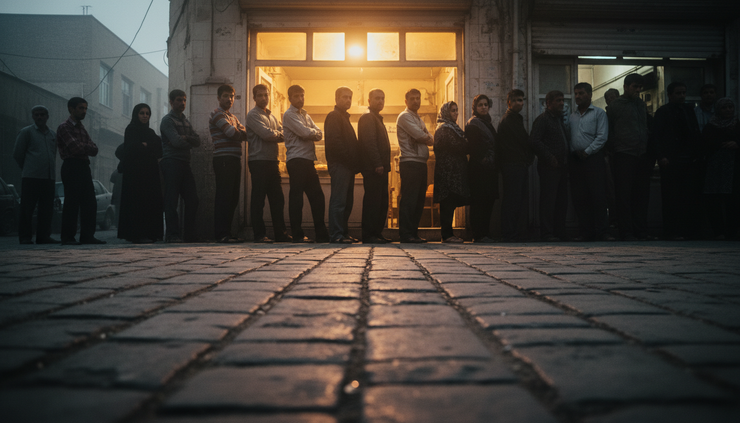
Iran’s economic crisis has reached into ordinary routines. A collapsing currency means salaries very little purchasing power. Food prices become a daily source of stress. Fuel shortages become public evidence of state failure. The government can blame sanctions, foreign enemies, corruption, mismanagement, or hidden profiteers, but people still have to stand in longer and longer line.
That pressure changes behavior inside the ruling class.
Political figures may blame hardliners for blocking relief. Hardliners may accuse politicians of weakness and betrayal. Business circles may blame corruption and isolation. Security factions may accuse everyone else of failing to defend the revolution.
None of these factions wants to be held responsible for the condition of the country. Each wants control without blame. There can never be stablility in this arrangement.

Trump’s claim of a close deal adds pressure, not calm
When Trump says a deal is close regarding Hormuz, the effect inside Iran creates more and more chaos.
For the IRGC, many possible diplomatic terms are non-starters because they could limit military leverage or reduce the value of their military. For politicians, the need is more urgent and practical. Sell oil. Bring in hard currency. Feed people. Keep streets calm.
This split is not minor. It goes to the heart of regime survival.
A faction that can claim it saved the economy may gain power. A faction that looks responsible for hunger, inflation, and gasoline shortages may lose standing. That makes every diplomatic rumor dangerous. It turns negotiation into an internal rivalry.
The IRGC wants leverage while politicians need relief
The IRGC’s strength comes from more than weapons. It also comes from its role in the economy, its presence in strategic industries, and its ability to shape national security decisions. In a crisis, it can argue that discipline and resistance matter more than compromise.
The political class has a harder job. It must explain visible hardship. It cannot eat slogans or distribute ideology at supermarkets. It needs to be competent .
This creates competing definitions of survival.
For the IRGC, survival means preserving the security state at all costs. For politicians, survival means making a deal before the public loses all its remaining tolerance. For business interests, survival means reopening channels for trade. For smugglers and shadow networks, survival means keeping scarcity profitable.
Those goals cannot all win at the same time.

The opposition is the regime’s greatest fear
The regime’s greatest fear is not only sanctions, oil prices, or foreign pressure. It is the opposition at home.
That defiant opposition is not a single organization. It includes workers, students, families of prisoners, women demanding basic rights, ethnic and religious minorities, exiled voices, and ordinary people who do not believe reform is possible. The regime can arrest leaders, block communication, and blame outsiders, but it cannot erase the memory of repeated protest waves, that have slaughtered many of them.
This is why factional conflict matters. If one faction decides that it cannot survive inside the current order, it will reposition itself. It will stand with the people. It will blame the IRGC and insist on a national reset.
That does not mean the faction has become democratic overnight. Survival often wears the language of reform. Still, when ruling elites fracture, the public gains space. Cracks at the top can make pressure from below harder to contain.
The Islamic Republic has long relied on fear, patronage, and factional balance. If those three tools disapear, the system will collapse.
Who breaks first
The illusion of an Iranian diplomatic breakthrough rests on the idea that Tehran can negotiate as one actor. It cannot while factions are in contentious conflict with one another, blame each other for their failures, and compete for survival.
The IRGC wants to preserve its leverage. Politicians want money, oil sales, and basic stability. Business networks want access. Smugglers want scarcity. The public wants dignity, food, fuel, and an end to rule by fear.
Those demands are colliding.
When the crisis deepens, one or more factions may try to save themselves by departing from the dictatorship they helped create and sustain.
The regime can barely survive pressure from outside when it trys to stay united inside. The greatest danger is when the people are no longer afraid and feel they have nothing more to lose. And ultimately the desperate factions are no longer loyal to each other.
Trumps plan comes to fruition. Regime change. Which was always the strategic goal. In the mean time relax and watch Iran implode, and a pro-Western regime emerge.


Comments